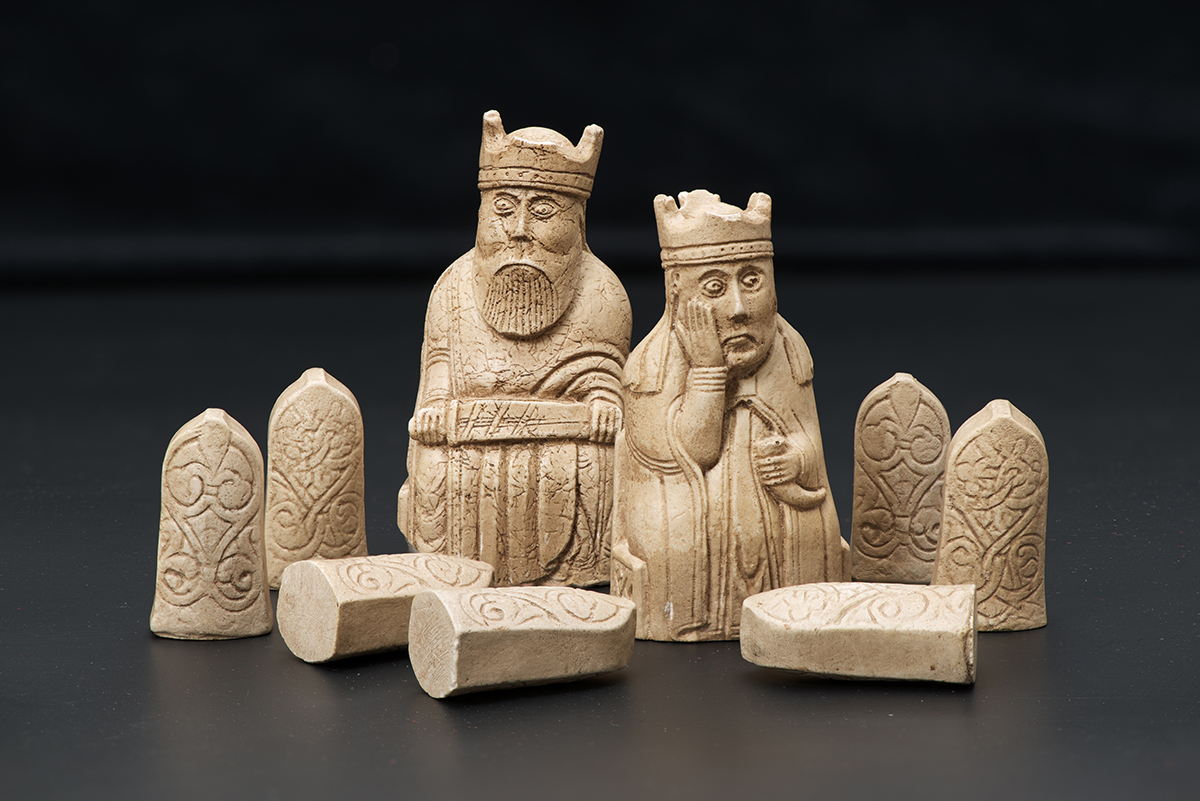
Viking chess set
Period
12th centuryPlace
Lewis Island, United Kingdom
Material
Walrus tusk
Location
the British Museum, London, UK
Category
The GameSubcategory
Chess sets
Curious fact
“The Lewis chessmen” remain the symbol of medieval chess, including in most film adaptations of the period
Perhaps the most famous European chess pieces dating back to the Middle Ages were found by pure chance and under still unexplained circumstances. It is known only that they were found off the coast of the Isle of Lewis to the west of Scotland in 1831, and, having changed hands multiple times, are now for the most part in the British Museum. As not just one but almost three chess sets (aside from individual pieces) have survived to our day, we have an insight into the chess culture of the 12th century when mastering the game was a must for every knight, as well as an idea about the advanced techniques used in chess-making. These are not abstract chessmen: the entire set, from the king to the rook, is crafted thoroughly, except the pawns, which have traditionally lacked anthropomorphic traits. Art historians believe that the walrus tusk chess set arrived in Scotland from Norway (which would also explain its alternative name as the “Viking chess set”). In their turn, skeptics ask a lot of tricky questions: for example, why does the set have the bishop, unknown in chess until the 14th century? In any case, “the Lewis chessmen” remain the symbol of medieval chess, including in most film adaptations of the period.